
Spirit Guides
Whiskey
From malting and mash bills to Scotch, Irish whiskey, bourbon and rye: casks and cocktail choices.
01
From grain to whiskey
Whiskey is made by distilling a fermented grain mash and maturing it according to category rules. Malting supports enzymes that convert starch into sugar. Proportions of barley, corn, rye and wheat interact with fermentation, stills and casks to form character. Whiskey and whisky spellings are mainly regional conventions, not quality grades.
02
Scotch and Irish styles
Scotch includes malt and grain spirits and their blends, matured in Scotland for at least three years. Single malt comes from one distillery and does not mean one cask. Irish styles include malt, grain, pot still and blended whiskey. Some are triple-distilled, but not all. Peat smoke depends on production choices more than a region name alone.
03
Bourbon, rye and other regions
Bourbon uses at least 51% corn in its mash bill, while American rye whiskey uses at least 51% rye. New charred oak is fundamental to these categories, and terms such as straight add requirements. Canadian rye wording does not impose the same American grain percentage. Check current production and labeling rules for Japanese and other regional whiskies.
04
Casks, blending and tasting
Cask type, previous use, climate and time affect vanilla, dried fruit, spice and tannin notes. A fixed percentage of flavor cannot universally be assigned to oak. Blending uses components to create consistency or a new profile. Assess nose, texture, alcohol integration and finish rather than relying only on age and color.
05
Choosing a cocktail style
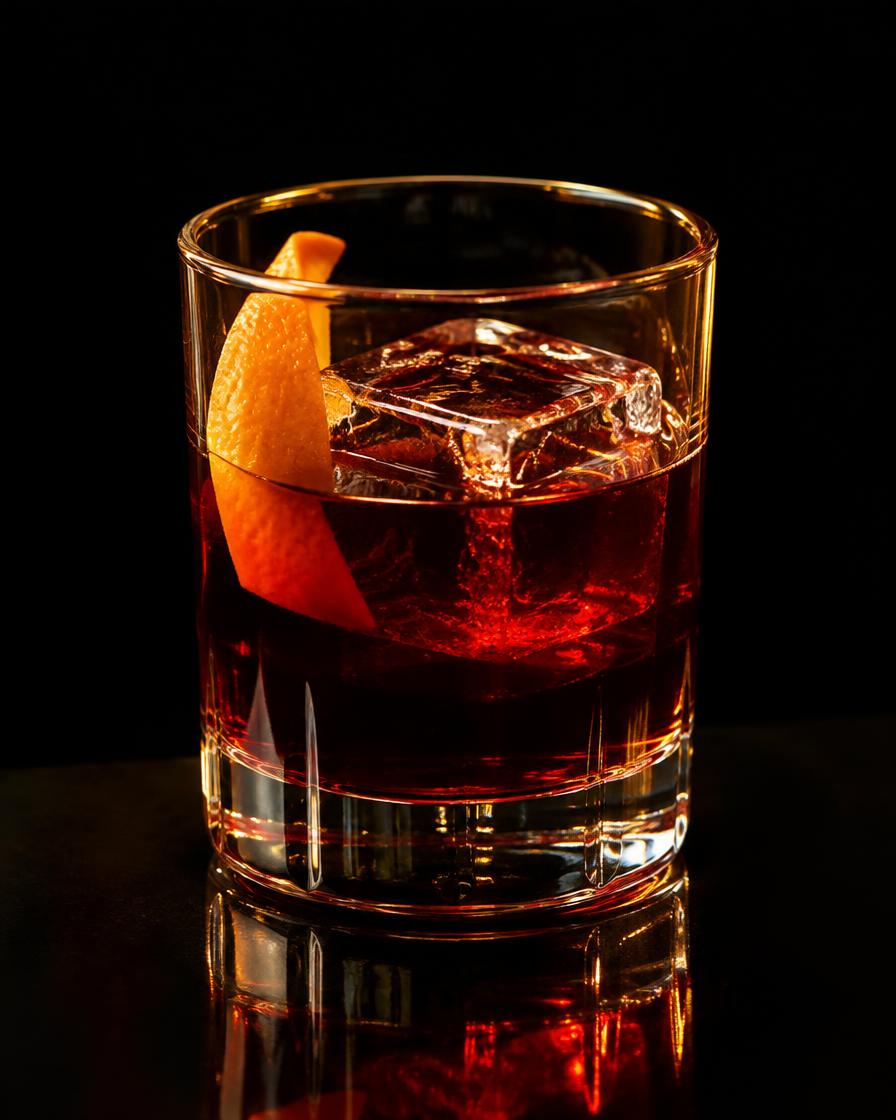
The base is prominent in an Old Fashioned; a Manhattan needs harmony with vermouth and bitters. Rye can lend spice and bourbon a rounder grain character, but brand differences are substantial. Reassess dominant aroma and alcohol when substituting smoky Scotch or cask-strength products. Iced and ice-free serves evolve differently; measure portions.
06
Region, peat, mash bill and cask
Scotch regions provide geography, not single flavor guarantees. Unpeated Islay and peated examples elsewhere exist. Peat smoke used in malt drying differs from toasted cask aroma. Single malt means malt whisky from one distillery, not one barrel; blended Scotch combines malt and grain components.
Bourbon and rye grain requirements relate to regulation but do not describe the whole mash bill. Fermentation and casks interact with wheat, rye, corn and malt contributions. Tennessee's Lincoln County Process generally involves pre-maturation charcoal treatment, with legal exceptions and brand differences. Irish whiskey is not universally triple-distilled or unpeated. Compare style before making regional assumptions. Bourbon and rye change Manhattan structure, whereas Rob Roy uses Scotch; recipe identity should remain explicit.
07
From grain to wash: malting and milling
Whisky is made by converting grain starch to sugar, fermenting it, distilling the result and maturing it in wooden casks. Where barley is used, the first step is malting: grain is steeped in water and allowed to germinate, developing the enzymes that will later break down starch. Germination is stopped by drying with hot air. In parts of Scotland, peat smoke is used during drying; its phenolic compounds cling to the malt and give the spirit smoky, medicinal and coastal notes. Phenol levels are measured in parts per million, yet the same malt specification can taste different depending on distillation cuts.
Dried malt is milled into grist and mixed with hot water in the mash tun. Temperatures are raised in steps so enzymes can convert starch into sugar, producing a sweet liquid called wort. Corn and rye are usually cooked first to gelatinise their starch, with malted barley added for enzymes. In American production the recipe of grains is called the mash bill: more corn leans toward sweetness and roundness, more rye toward spice and dryness, wheat toward a soft, bready profile.
08
Fermentation and distillation choices
Cooled wort is moved into fermenting vessels called washbacks and yeast is added. After two to four days the result is a beer-like liquid of roughly 7–9 percent alcohol, known as the wash. Longer fermentation tends to create more fruity esters; wooden or stainless vessels, yeast strain and temperature all shape these aromas.
Malt whisky is usually distilled twice in copper pot stills: the wash still produces low wines of around 20–25 percent, and the spirit still is where heads, hearts and tails are cut. Only the heart goes into cask. Neck height, lyne arm angle and cut points define house character. Grain whisky and most American whiskey are produced in continuous column stills; American producers often follow the column with a doubler or thumper.
09
Scotch whisky: categories and regions
Scotch whisky must legally be distilled in Scotland and matured in oak casks for at least three years. Single malt is produced at one distillery from malted barley only, in pot stills. Single grain comes from one distillery and may use other cereals, usually in column stills. Blended malt combines malts from several distilleries, while blended Scotch combines malt and grain whiskies. An age statement refers to the youngest whisky in the bottle.
Regions describe tendencies, not strict rules. Speyside, with the densest concentration of distilleries, is known for fruity, honeyed and sherry-cask styles. The Highlands cover a vast area, from light and floral to full-bodied and gently smoky. Many Islay producers make heavily peated, iodine and maritime whiskies. The Lowlands are traditionally associated with lighter, floral spirits. Campbeltown is small but historic, often oily, briny and lightly smoky. The Islands are not an official region, yet Skye, Orkney and Jura have distinctive styles.
- Speyside: apple, pear, honey, sherry and dried fruit
- Highlands: flowers, heather, malt and light smoke
- Islay: peat, iodine, sea salt and embers
- Lowlands: grass, lemon and soft cereal
- Campbeltown: oily texture, brine and subtle smoke
10
Irish, American and world whiskies
Irish whiskey is matured in wooden casks for at least three years and is often known for a smooth, fruity character. The country's unique category is single pot still: malted and unmalted barley distilled together in pot stills, giving a creamy, spicy texture. Triple distillation is a common Irish tradition, though not mandatory for every producer.
Bourbon must be made in the United States from a mash bill of at least 51 percent corn and matured in new charred oak containers. Distillation and barrel-entry strengths are legally capped, and no colouring or flavouring may be added. Though linked with Kentucky, it can be made anywhere in the US. 'Straight' indicates at least two years of ageing. Rye whiskey follows the same logic with at least 51 percent rye and tastes drier and more peppery. Tennessee whiskey usually goes through the Lincoln County Process, filtering through sugar maple charcoal before barrelling.
Japan built on Scottish tradition and became renowned for meticulous blending; mizunara oak can contribute sandalwood and incense notes. Canadian whisky is often made by distilling grains separately and blending afterwards, and despite the nickname 'rye' it is not always rye-dominant. Newer producers in India, Taiwan, Australia and Europe show how warm climates accelerate maturation.
11
Casks, maturation and the angels' share
Much of whisky's colour and aroma comes from the cask. American white oak brings vanilla, caramel and coconut; European oak gives more tannin, dried fruit and spice. Because bourbon requires new barrels, used bourbon casks travel worldwide, especially to Scotland. Sherry, port, wine and rum casks add layers during finishing periods.
Casks are charred inside, forming a carbon layer that captures harsh compounds and caramelises wood sugars. A first-fill cask makes a strong impression, while refill casks let distillery character show more clearly. Every year part of the spirit evaporates — the angels' share. Losses are low in cool, damp Scotland and far higher in hot Kentucky or India, and strength may fall or rise depending on climate.
12
Reading labels, serving and choosing for cocktails
On labels, 'cask strength' means bottled undiluted at high proof, 'non chill-filtered' means no cold filtration, and 'single cask' means drawn from one barrel. Age alone does not guarantee quality; young, balanced whiskies often work better in cocktails than older ones.
A tulip-shaped glass suits tasting, and a few drops of water can open aromas. In cocktails, style has a clear role: bourbon or rye provide body and spice in an Old Fashioned or Manhattan; a soft bourbon balances acid in a Whisky Sour; in a Penicillin a blended Scotch forms the base while a float of Islay adds smoke. In a highball, a light Japanese or Scotch blend with soda is crisp and refreshing.
Related cocktails
Related cocktails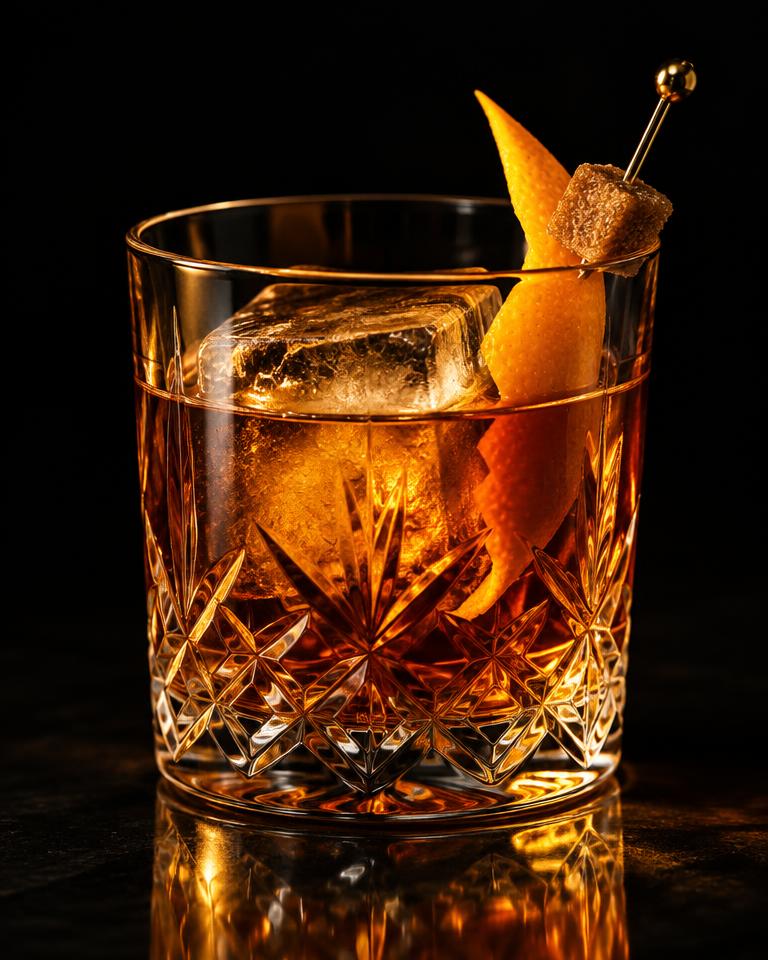 Whiskey
Old Fashioned
Whiskey, sugar, bitters and water — the original definition of a cocktail.
 Whiskey
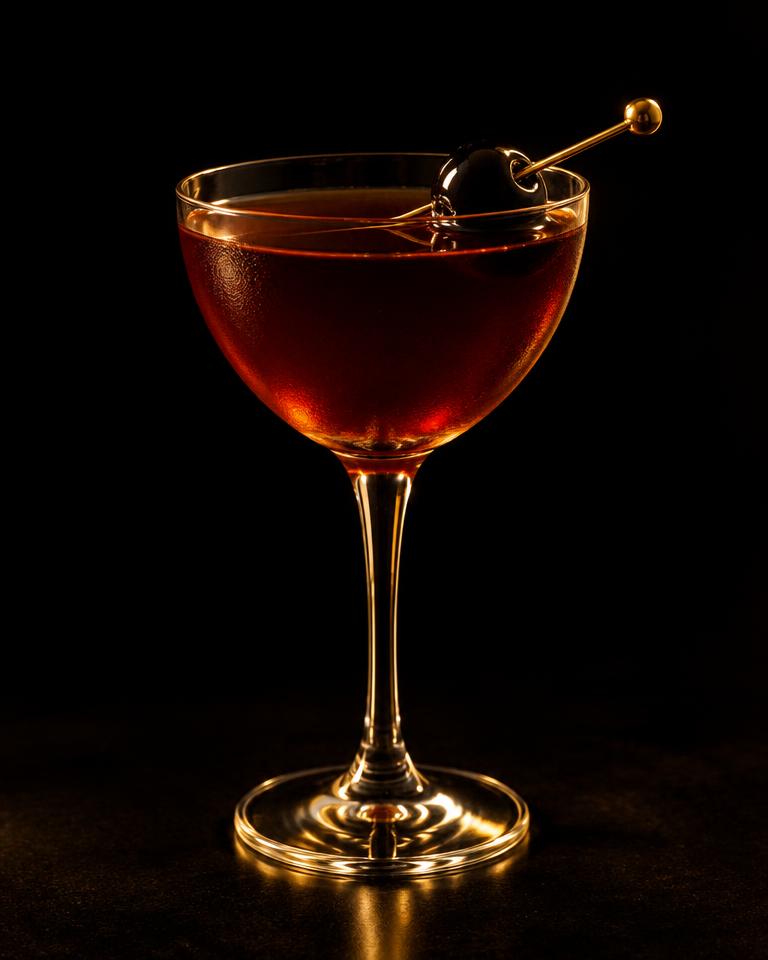
Manhattan
Rye whiskey, sweet vermouth and bitters, stirred and served up.
 Whiskey
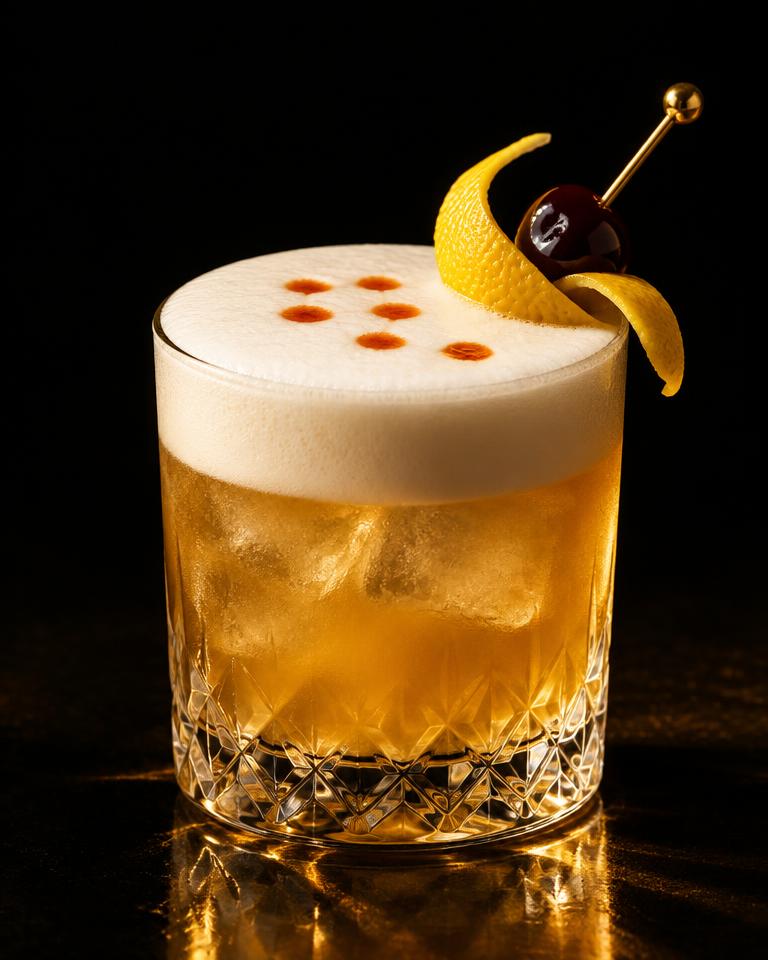
 Sour
Bourbon, lemon and sugar, optionally silky with egg white.
 Whiskey
Penicillin
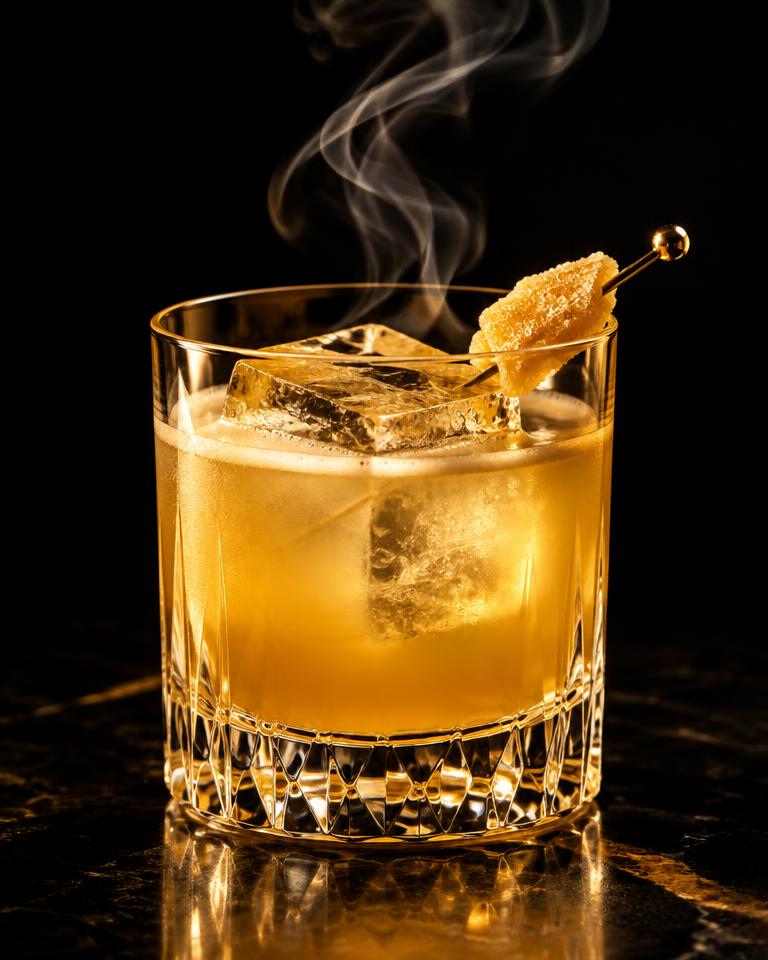
Blended Scotch, lemon, honey-ginger and a smoky Islay float.